🤍Teaching Kids Gratitude During Hard Times, Gently
July 15, 2026
When a family is moving through something heavy — a loss, an illness, a worry that won’t lift — gratitude can feel like the last thing to reach for. And yet teaching kids gratitude during hard times isn’t about brushing the hard part aside. It’s about helping a child hold two true things at once: this is sad, and there is still a little good here.
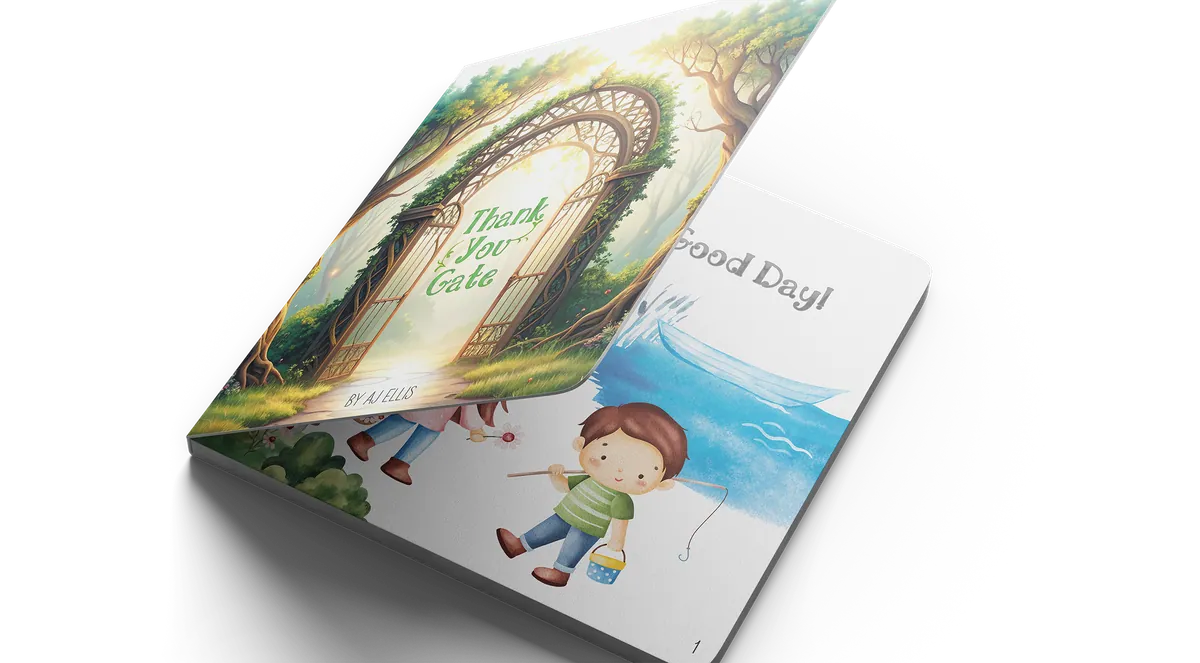
In Thank You Gate by AJ Ellis, every thank-you becomes a vine on your own gate — a gentle boundary that lets a little peace in, even on the hardest days. This is a softer kind of post. If your family is in a tender season, please take only what helps and leave the rest.
Let the hard feeling come first
Before any gratitude, the sad or scared feeling needs room. A child who senses you want them to “look on the bright side” often learns to hide what hurts — and hidden feelings don’t shrink, they just go quiet.
So begin by simply being with it. “That is really hard. It makes sense that you feel this way.” You don’t have to fix it or find the silver lining yet. Sometimes the most loving thing is to sit beside your child in the difficulty and let it be difficult. Gratitude can wait until the feeling has been heard.
Hold both at once: “and,” not “but”
When the moment feels right, you can gently make room for both. The trick is one small word. Not “That’s sad, but at least…” — the “but” erases the sadness. Instead: “That’s really sad. And — was there one tiny good thing today, too?”
The “and” lets both stay true. A child can miss someone terribly and feel glad their cousin came to visit. They can be frightened and grateful for a warm bed. You’re not asking them to choose the good feeling over the hard one. You’re showing them the two can live side by side. That’s gratitude that holds up in real life.
Keep the thank-yous very small
In a hard season, “What are you grateful for?” can feel like too big a question. Shrink it right down. Look for the smallest, most ordinary good things — the ones still within reach.
- A warm drink.
- The dog leaning against your leg.
- A friend who texted.
- A blanket. A song. A quiet minute.
These tiny noticings aren’t a denial of the pain. They’re little footholds — proof that even now, the world still offers small comforts. Grunckle, the kind little gatekeeper from the book, would say even one small leaf is enough to keep a gate growing.
Try a calming breath together
When worry crowds in, the body often needs help before the mind can soften. A slow breath, shared, can steady you both.
Sit close and breathe together:
- In slowly through the nose.
- One small extra sip of air.
- A long, gentle breath out through the mouth.
- On the way out, think quietly: thank you for this breath.
- A few times, no rush.
The long exhale calms the body; the quiet thank-you gives the mind something kind to hold. The Greater Good Science Center at UC Berkeley notes that small, gentle gratitude practices can support a calmer mood — and on a heavy day, calm is plenty to aim for. You can find a longer version of this practice over on the blog.
Let gratitude be wordless when it needs to be
Some days, no one has words, and that’s completely okay. Gratitude doesn’t have to be spoken to be real.
It can be a hand squeezed at bedtime. A leaf added quietly to the gate. A favourite story read again. A note left on a pillow. On the hardest days, simply being gentle together — present, soft, unhurried — is its own kind of thank-you. Don’t push for the words. Let the warmth do the talking.
A gentle word about when to reach for more
Gratitude is a small comfort, not a cure. If your child’s sadness or worry feels too big — if it lingers heavily, changes how they sleep, eat, or play, or simply feels like more than your family can hold alone — please reach out to a trusted adult, your doctor, or a counsellor. Asking for help is its own act of love, and it’s never the wrong call.
You know your child best. Trust that knowing.
Be gentle with yourself, too
Caring for a child through a hard season is heavy work, and you deserve the same softness you’re offering them. Your own small thank-yous count. Your own slow breath counts. You can’t pour calm from an empty cup.
If it helps, keep one tiny ritual — a single bedtime thank-you, a leaf on the gate — and let everything else go for now. That one small vine, grown on a hard day, is quietly brave.
Whenever you’re ready, the free gratitude printables are here for soft, slow days. Add one small vine to your gate today. On the hard ones, one is more than enough.
Read the book behind the practice
Thank You Gate by AJ Ellis — every thank you is a little bit of magic.